Vivekananda: education as the manifestation of what is already within
Vivekananda’s line about a perfection already within hangs in countless school corridors. He took the body seriously, but kept it a servant, and our schools followed.
A three-year-old copies her grandmother’s wrist across her forehead while rolling her first roti. What the evidence on imitation shows, where it is disputed, and why a teacher’s body is never neutral.
A school can keep its playground on every register and still take it from children, one borrowed games period at a time. Why the ground matters for what a child is, not only for attention and marks.
Indian philosophy separates knowing again from knowing now. Why a child’s own anubhava deserves a place in the classroom, and why the teacher still matters.
We tend to think children see first and move later. Research on kittens, crawling babies and go-carts says the order runs the other way.
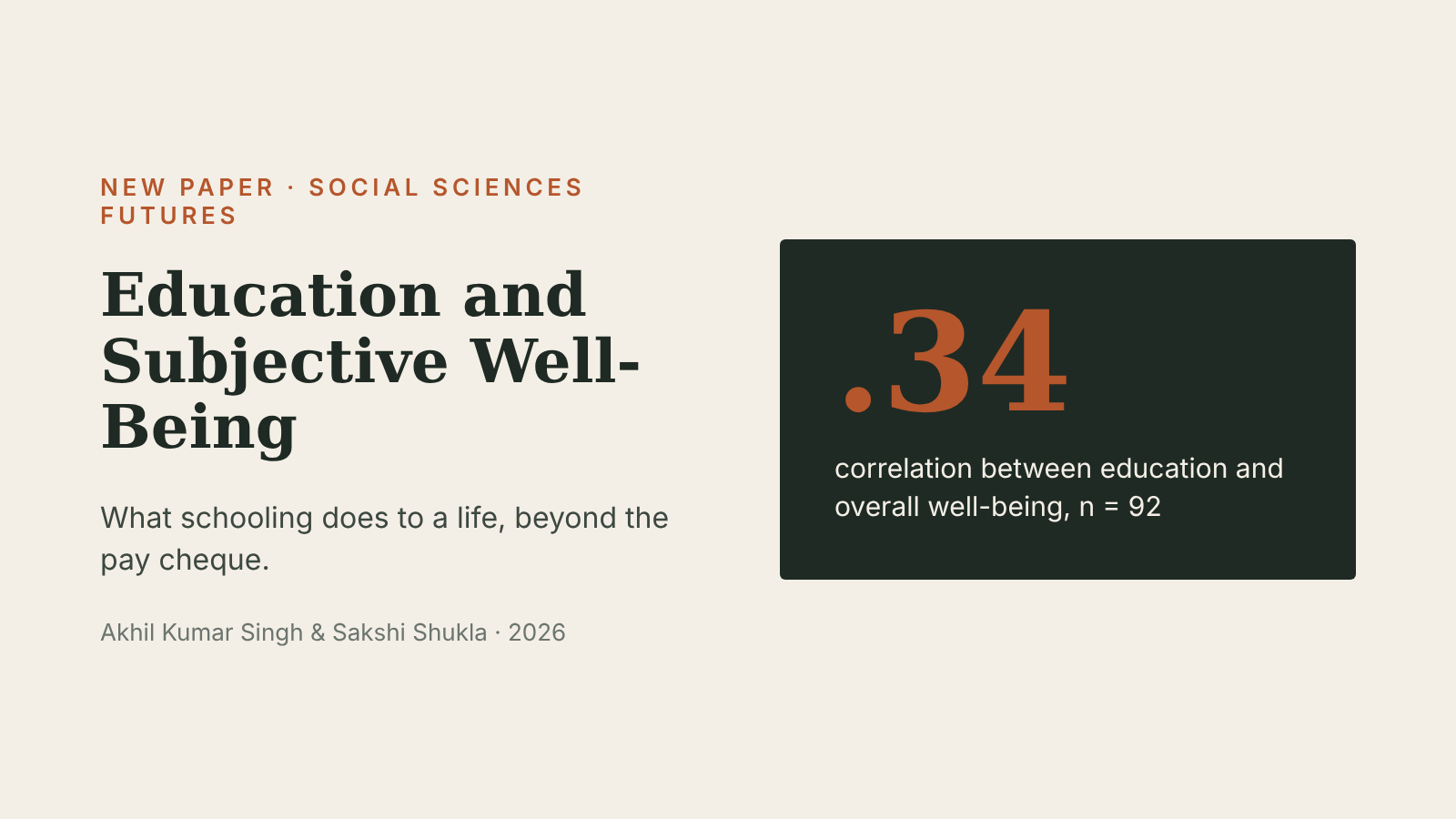
A new open-access paper with Sakshi Shukla finds that more education goes with higher well-being, mainly through relationships and personal growth, not autonomy and not a steadier mind.
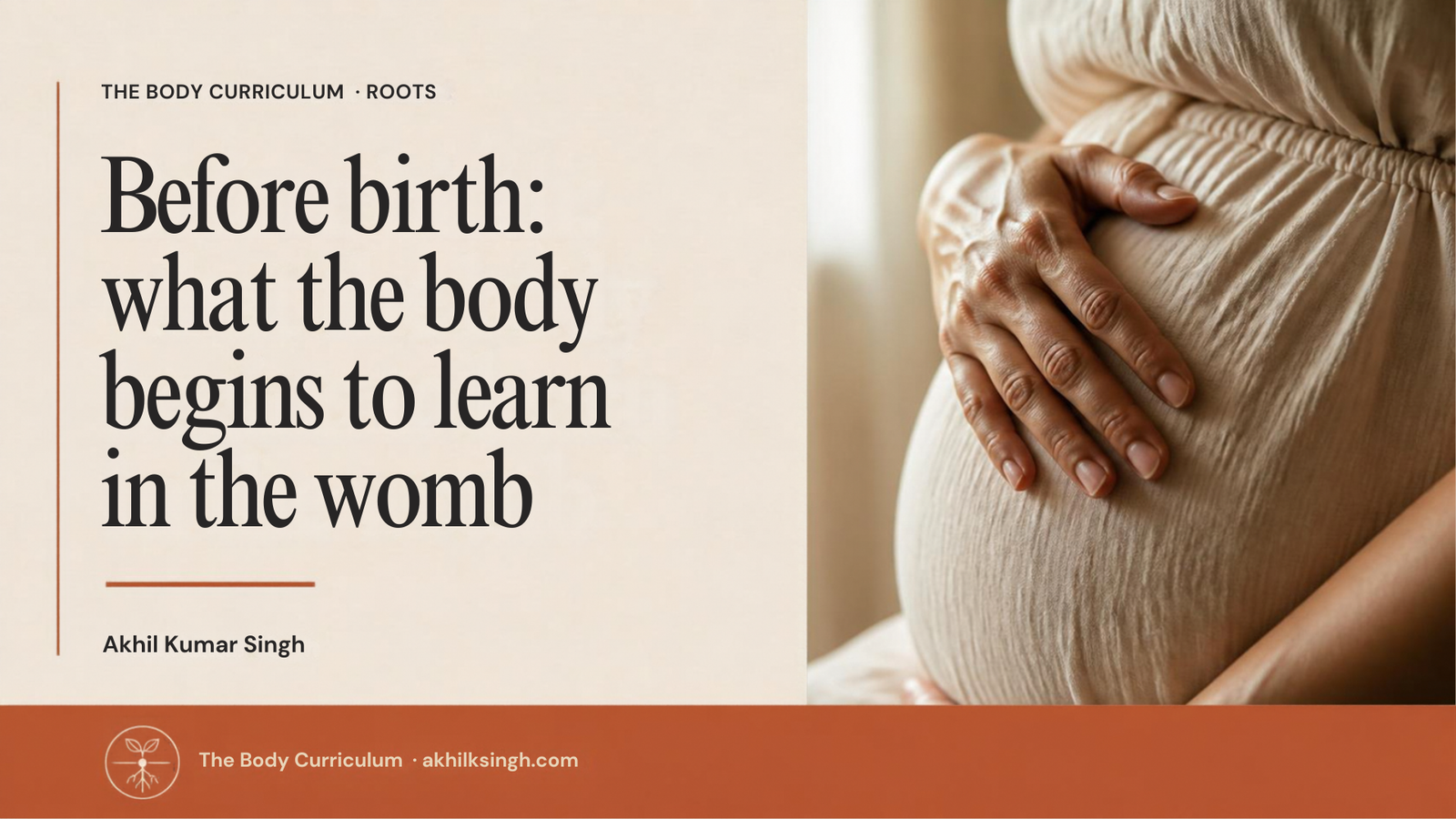
A baby is born already knowing her mother’s voice and the melody of her language. Here is what the body learns before birth, and where the evidence stops.
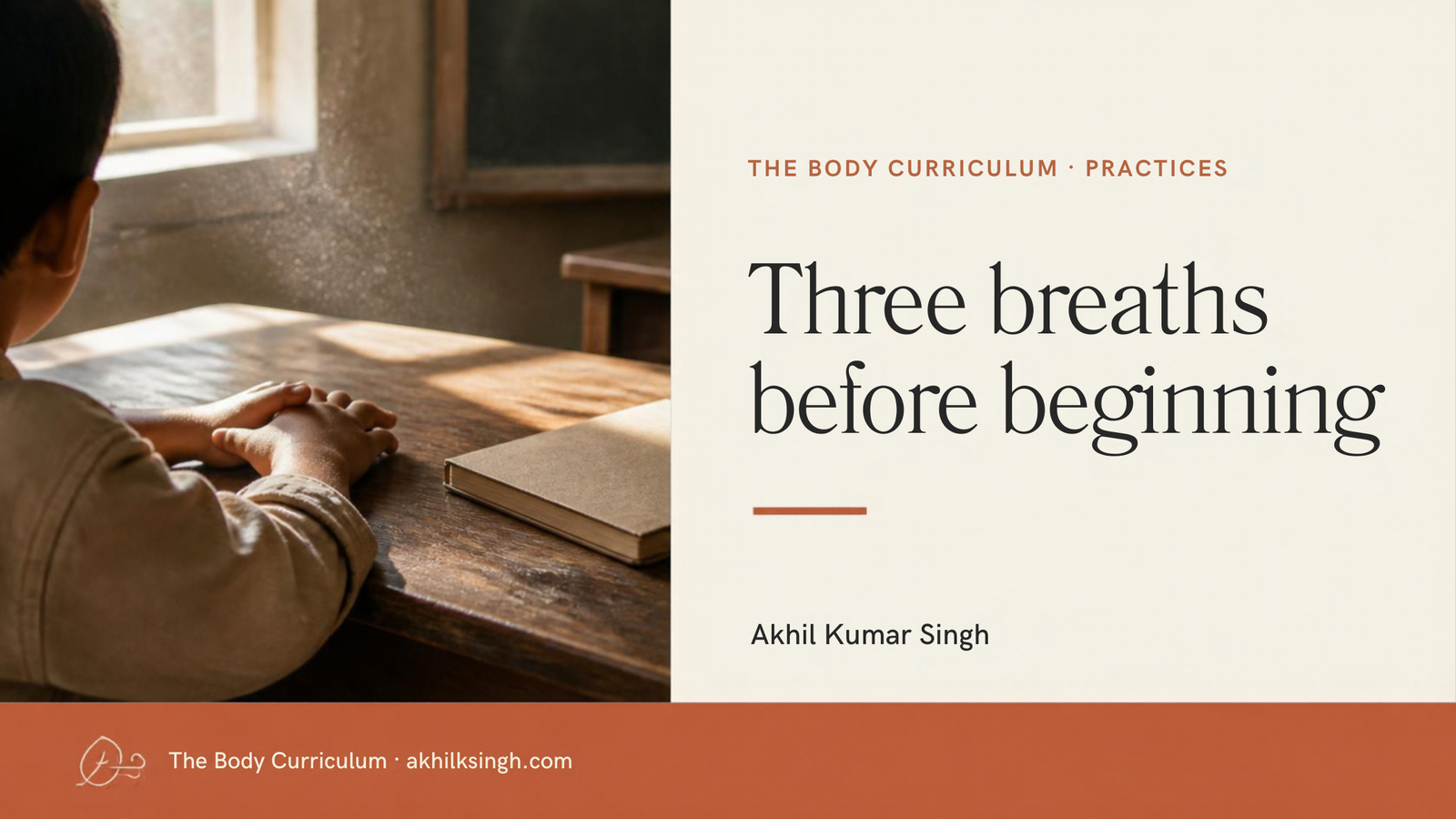
Children sit down long before they are ready to learn. Three slow breaths, taken together at the start of a lesson, give the body time to arrive.
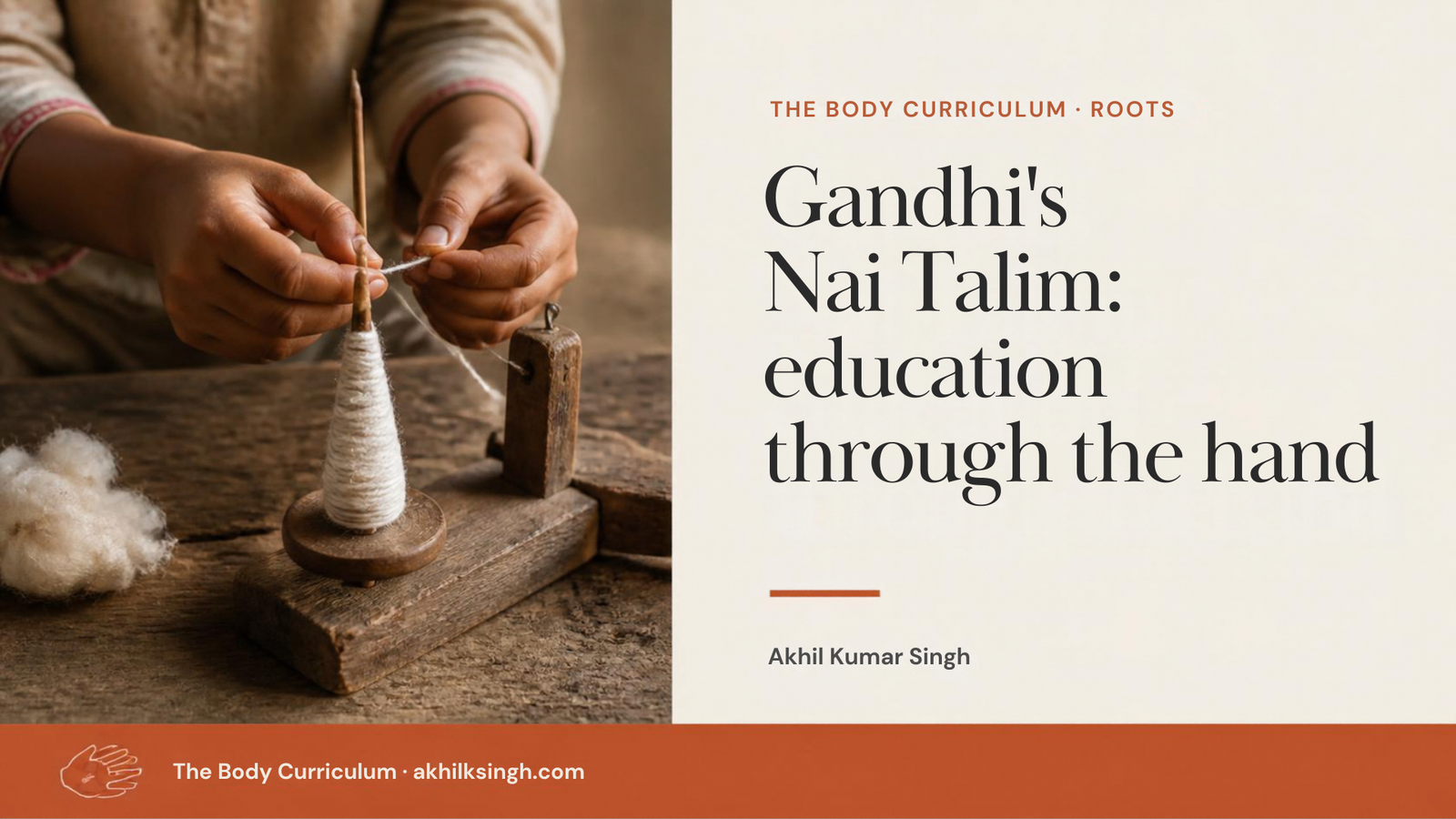
Gandhi’s Nai Talim put the hand at the centre of school. It saw the body as a way of knowing, and then asked that body to produce.
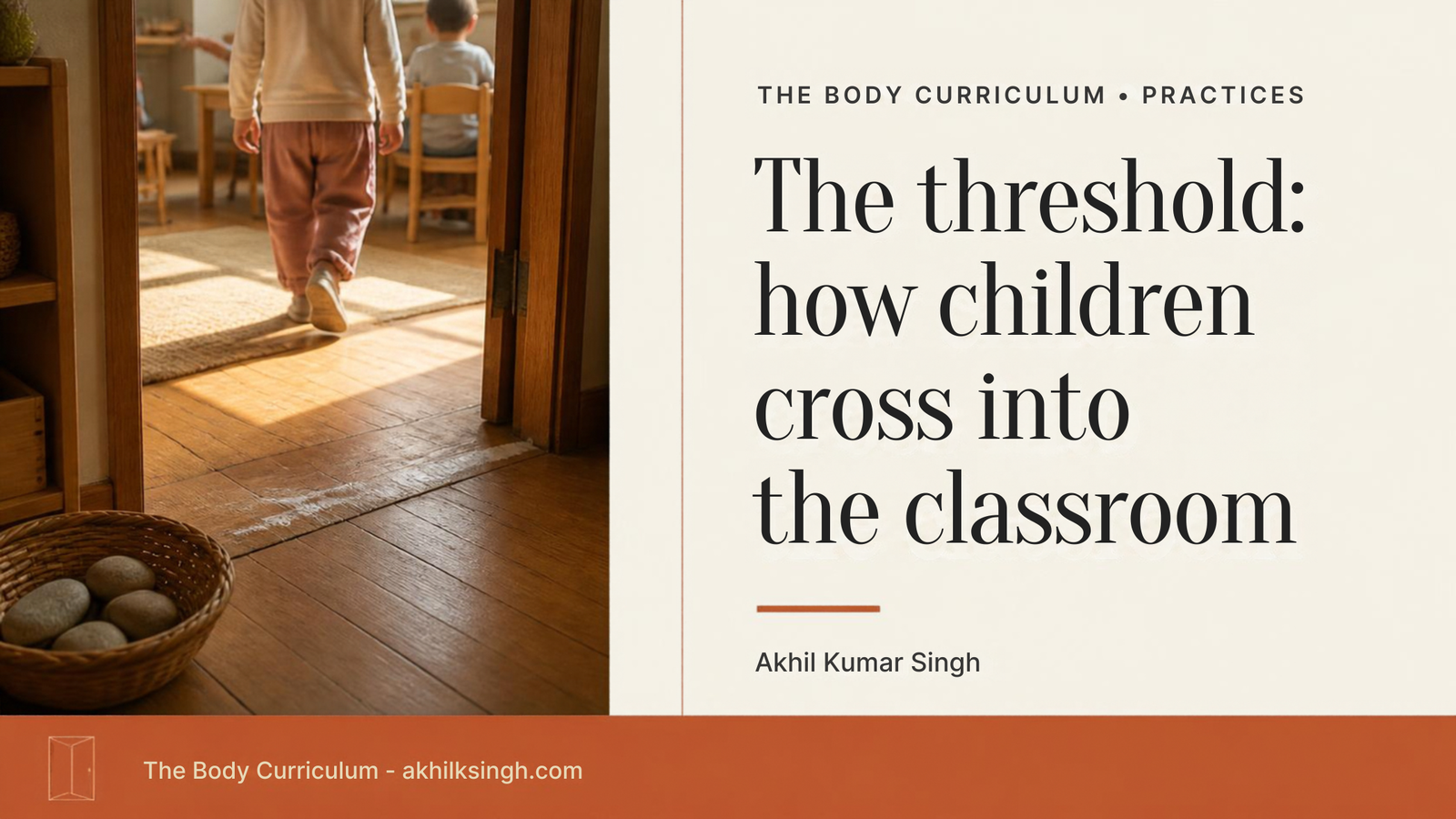
Every child who crosses the classroom door is making a small journey. Here is a five-minute doorway routine that turns arrival into the first lesson of the day.