Rough-and-tumble play: when to step in and when not to
Two children rolling in the dust are usually playing, not fighting. How a teacher can read the signs, set three rules and step in only when the play stops being play.
Two children rolling in the dust are usually playing, not fighting. How a teacher can read the signs, set three rules and step in only when the play stops being play.

Lunch is the richest sensory hour of the school day, and we spend it saying hurry up. A ten-minute weekly tasting helps children look, smell, touch, taste and find words for food.
Every child carries the morning in on the body. Here is how a teacher can read it at the door in thirty seconds, gently and without judging.

Ask children what they learnt and you get a timetable. Ask what their body learnt, and let them show it first, and you get the day back.

Free play is often the teacher’s tea break. This practice shows how to watch children at play, when to join in, and when to stay out.
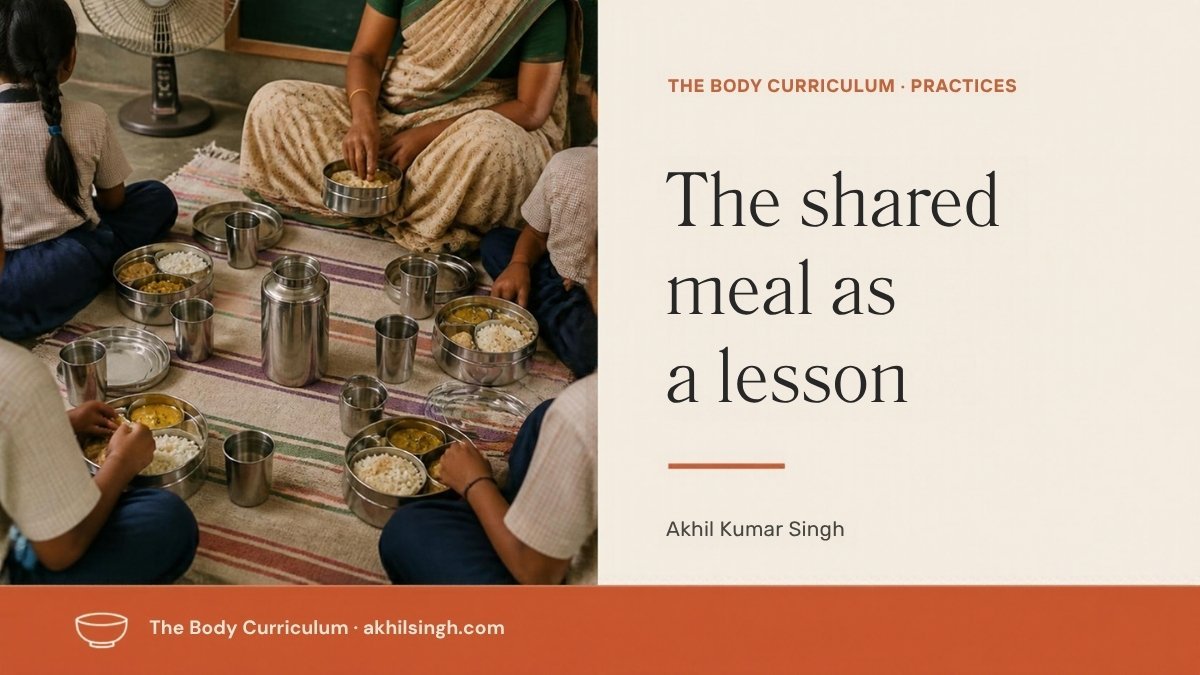
Lunch is often the least planned part of the school day. Here is how to turn the shared meal into a daily lesson in taste, trust and listening to the body.
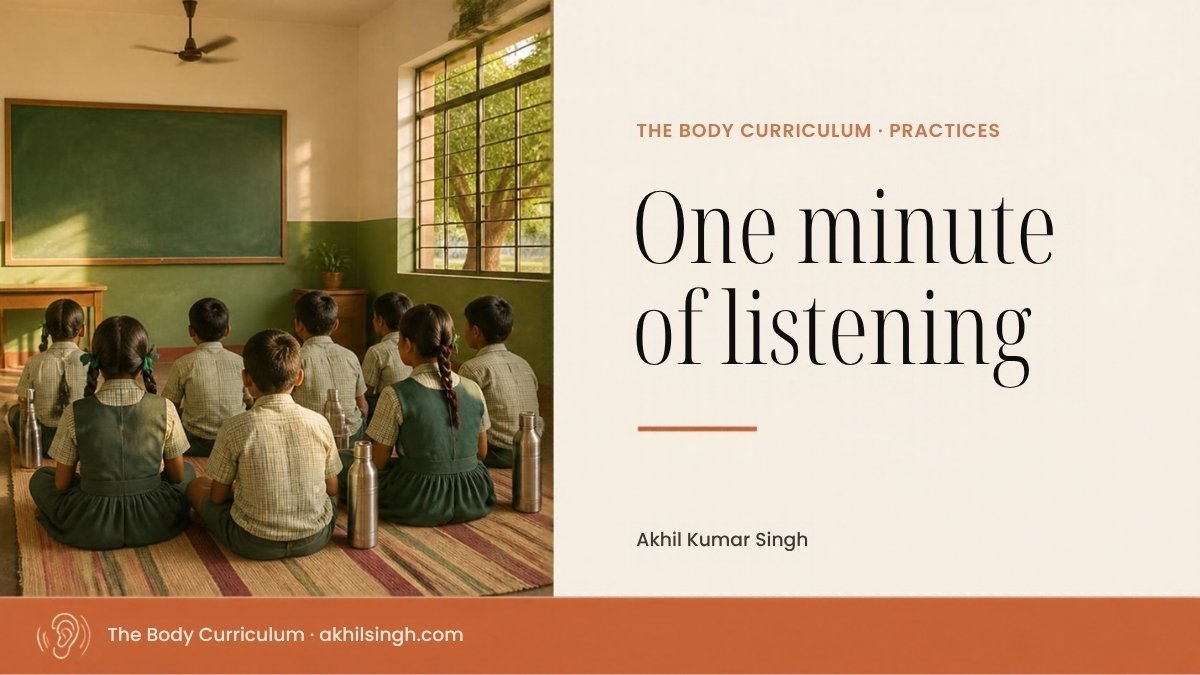
One minute in which the whole class listens to the room, not to the teacher. A simple practice that settles a noisy class without a single shout.
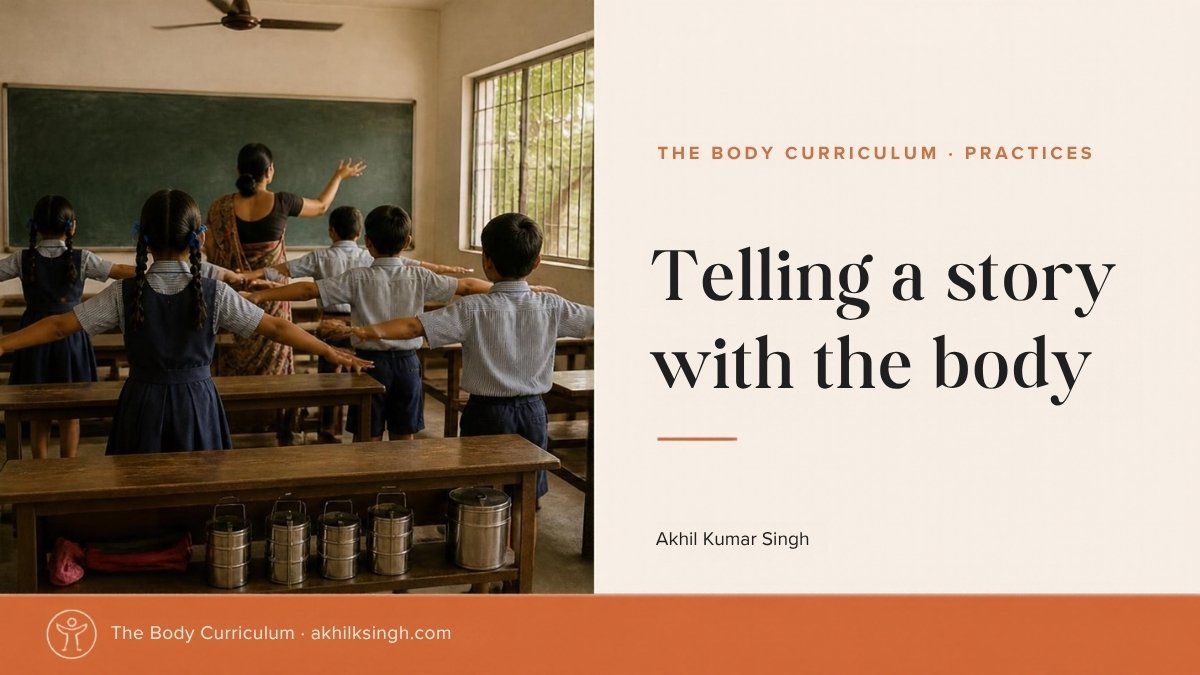
When a child mimes the story you are reading, they are not fidgeting. A simple routine for letting a story pass through children’s bodies, and what the evidence says.
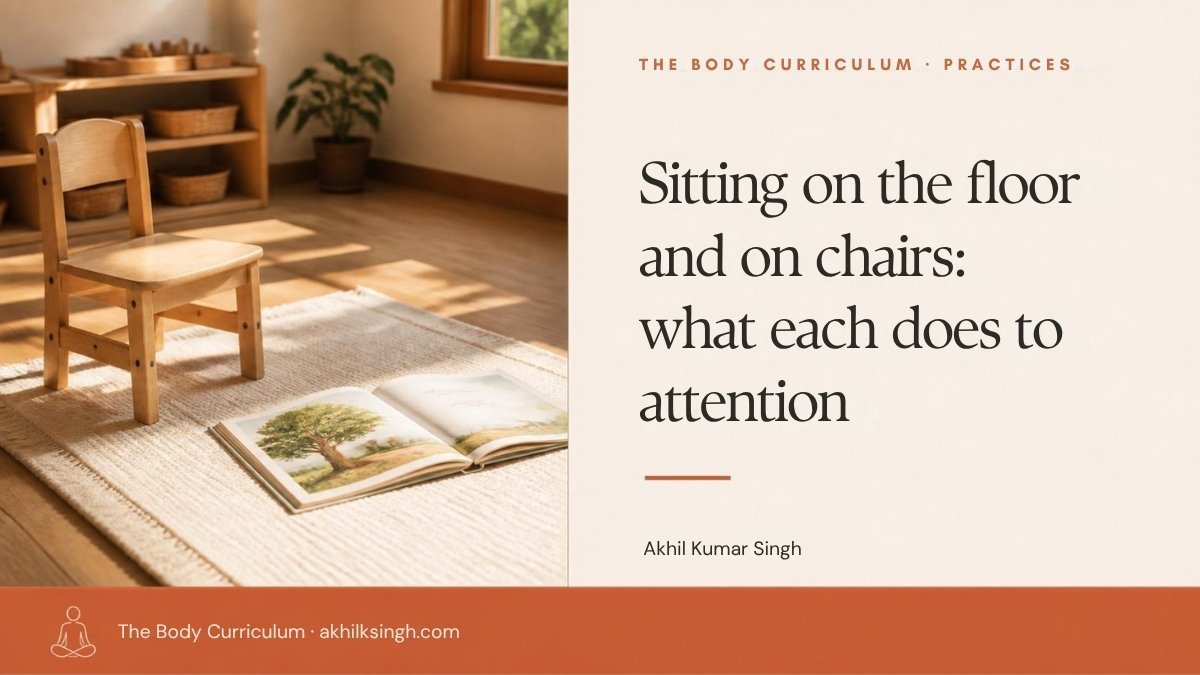
Half the class on the floor, half on chairs, and only some of them able to attend. A simple practice for matching the seat to the work.
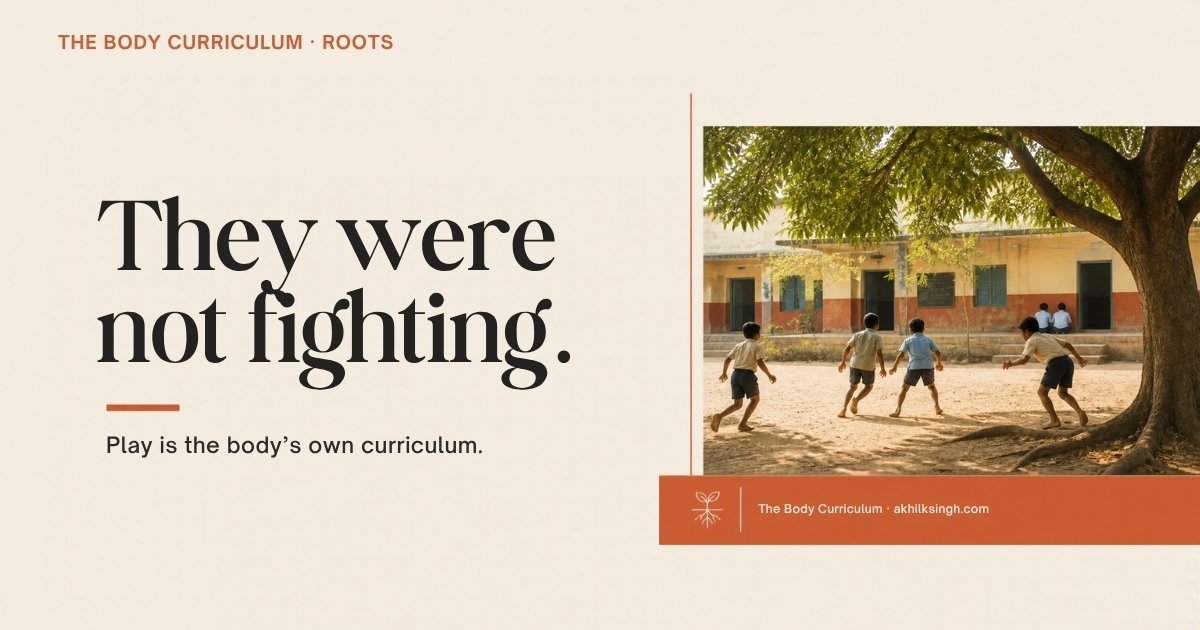
Two boys wrestling in a school courtyard are not fighting. Play is how a young body finds out what the world is and what it can do in it, and it deserves a place for that reason, not for the marks it might raise.