Rough-and-tumble play: when to step in and when not to
Two children rolling in the dust are usually playing, not fighting. How a teacher can read the signs, set three rules and step in only when the play stops being play.
Two children rolling in the dust are usually playing, not fighting. How a teacher can read the signs, set three rules and step in only when the play stops being play.

Free play is often the teacher’s tea break. This practice shows how to watch children at play, when to join in, and when to stay out.
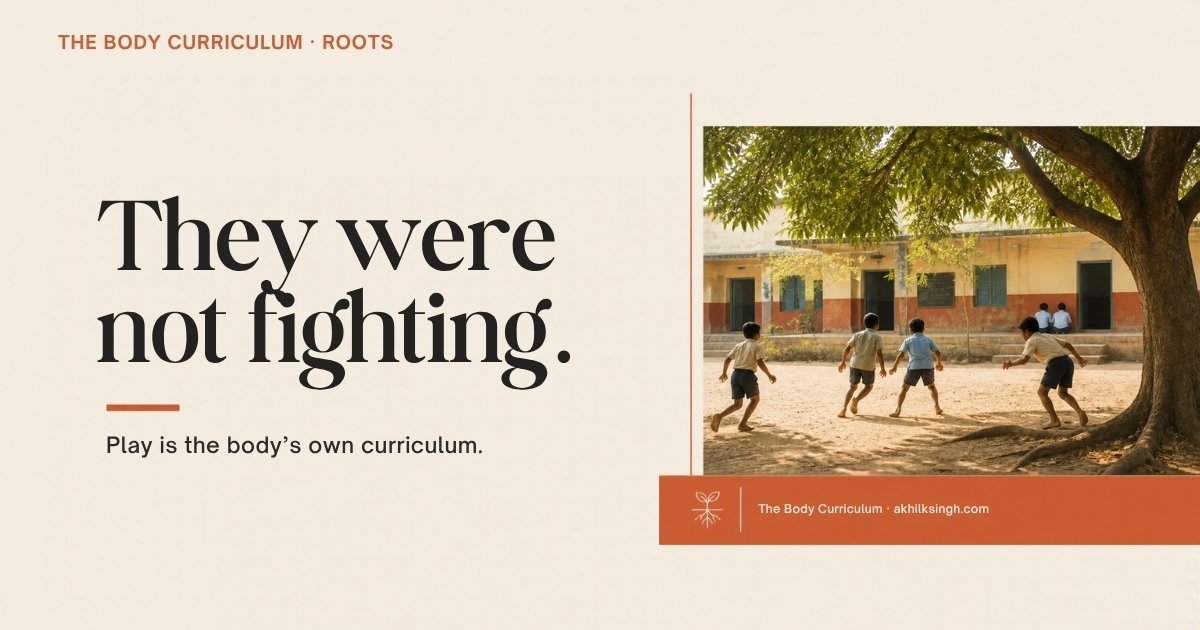
Two boys wrestling in a school courtyard are not fighting. Play is how a young body finds out what the world is and what it can do in it, and it deserves a place for that reason, not for the marks it might raise.
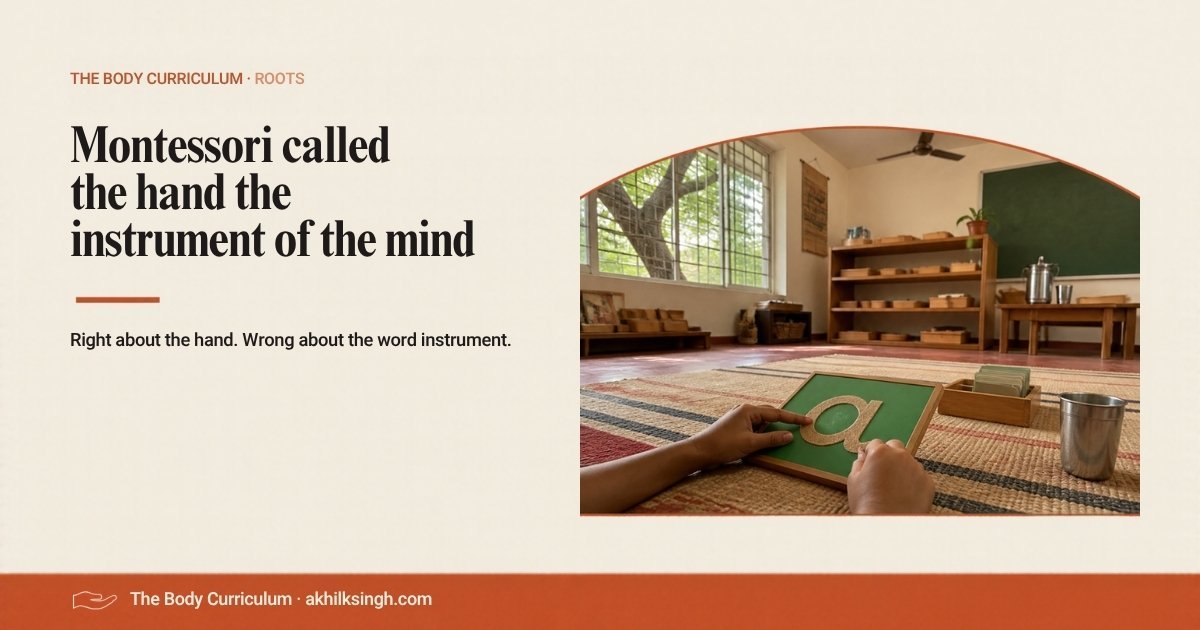
Maria Montessori trusted the child’s hand long before the pencil. But she called it the instrument of the mind, and that one word hides an old split between mind and body.

Rabindranath Tagore took the class outside and saw that a child learns with her whole body. What he got right, and what his own schools set apart.
A school can keep its playground on every register and still take it from children, one borrowed games period at a time. Why the ground matters for what a child is, not only for attention and marks.