Six hours of sitting: what the chair teaches
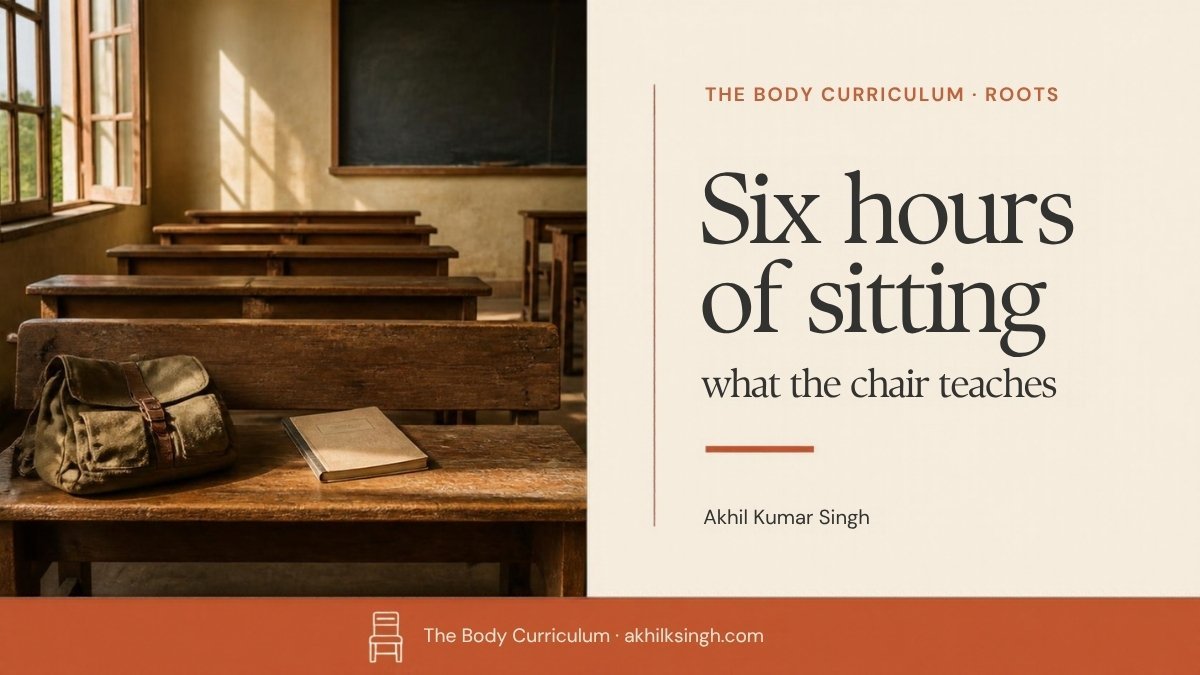
A posture held for years is a lesson. This essay asks what six hours of sitting teaches children about learning, attention and their own bodies, and why movement breaks are not the whole answer.
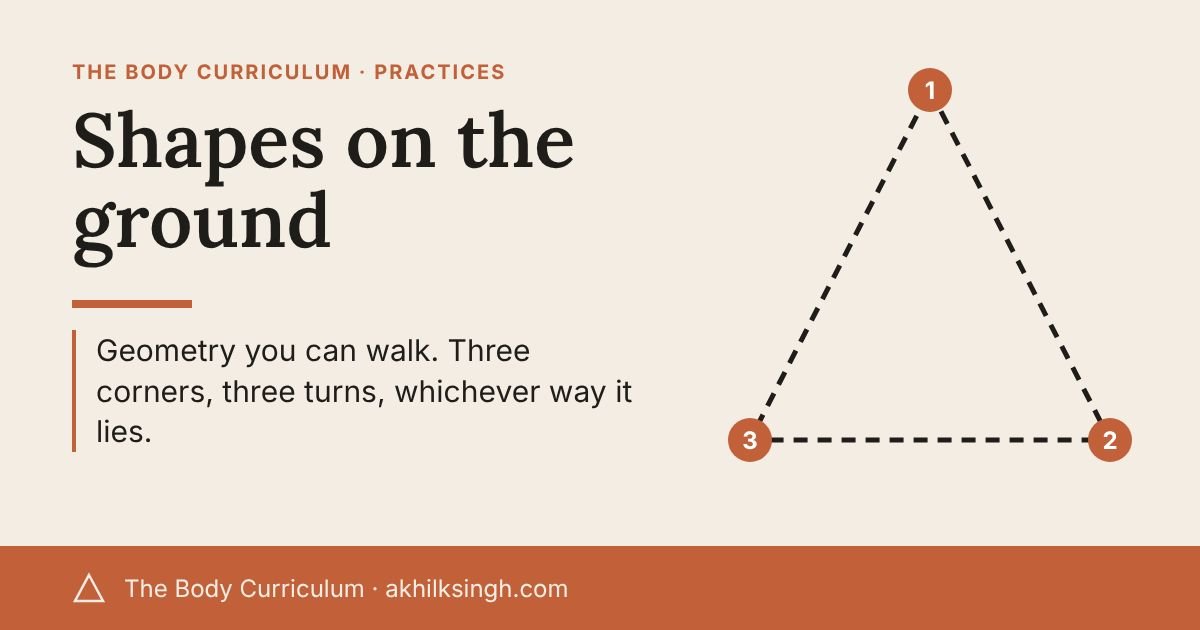
A child can count a triangle’s sides and still say a tipped one is not a triangle. Chalk the shape on the ground, let her walk it, and her feet settle what her eyes could not.
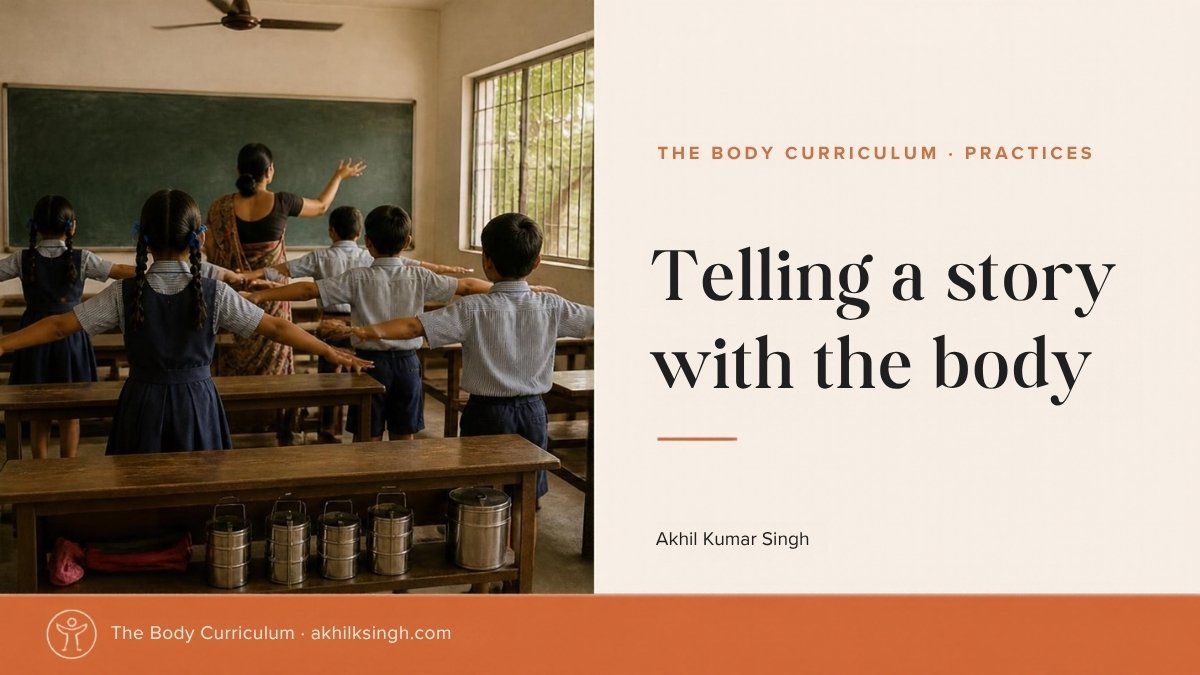
When children drift in a long lesson, a stretch helps for a minute. A movement break that carries the lesson itself does more, and needs no materials.
When a child mimes the story you are reading, they are not fidgeting. A simple routine for letting a story pass through children’s bodies, and what the evidence says.
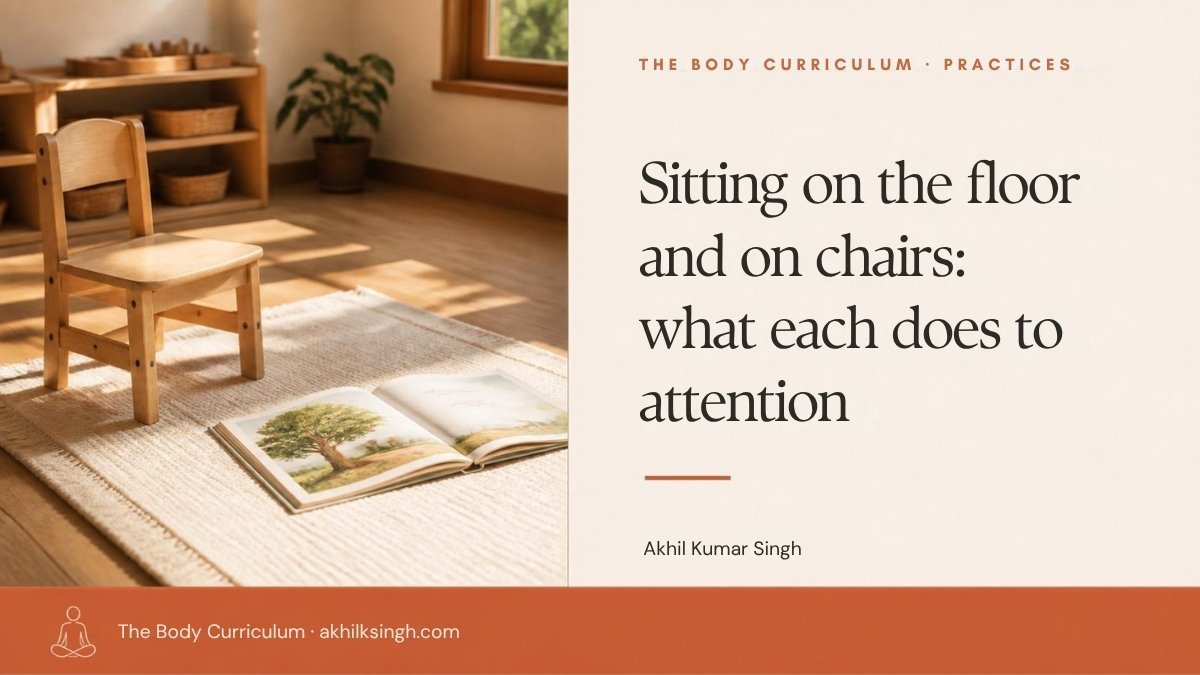
Half the class on the floor, half on chairs, and only some of them able to attend. A simple practice for matching the seat to the work.
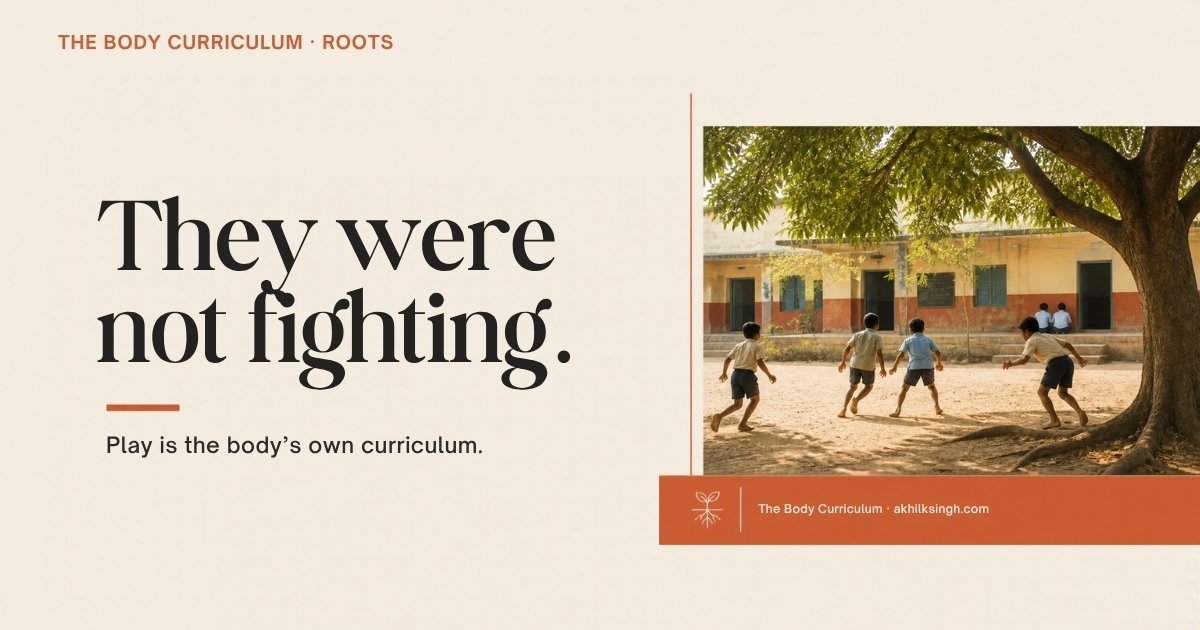
Two boys wrestling in a school courtyard are not fighting. Play is how a young body finds out what the world is and what it can do in it, and it deserves a place for that reason, not for the marks it might raise.
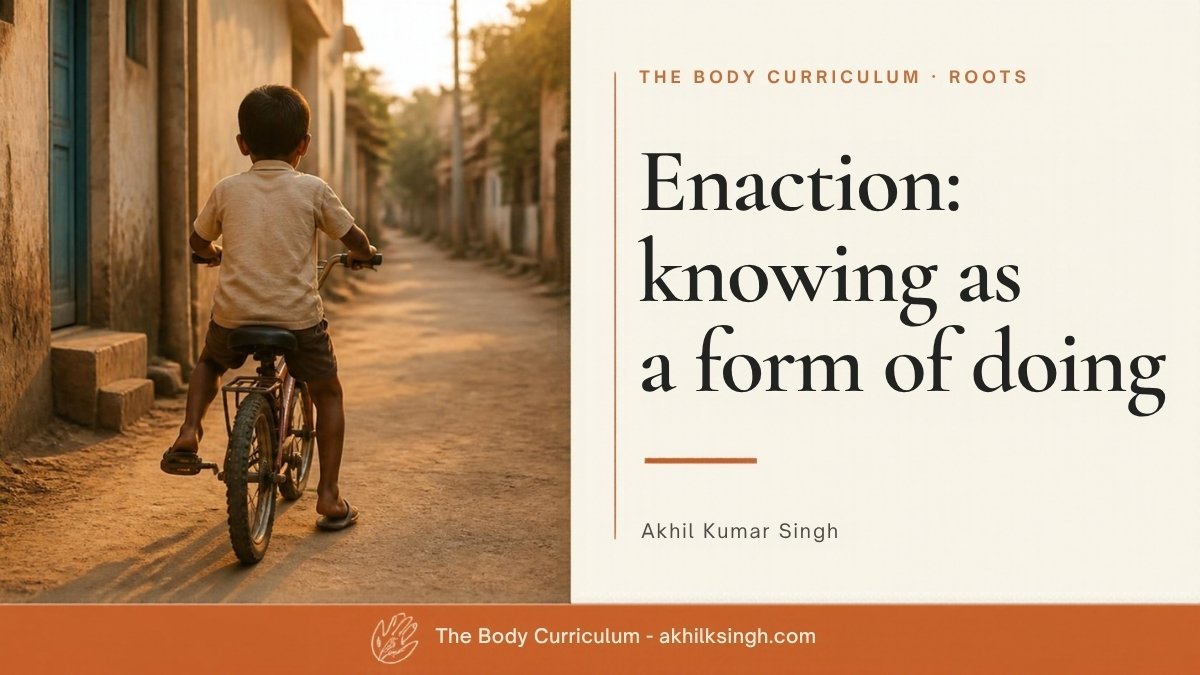
A child can learn to ride a bicycle in one evening without a word of explanation. Enaction asks what that tells us about knowing, and about the schools that count only the definition on the blackboard.
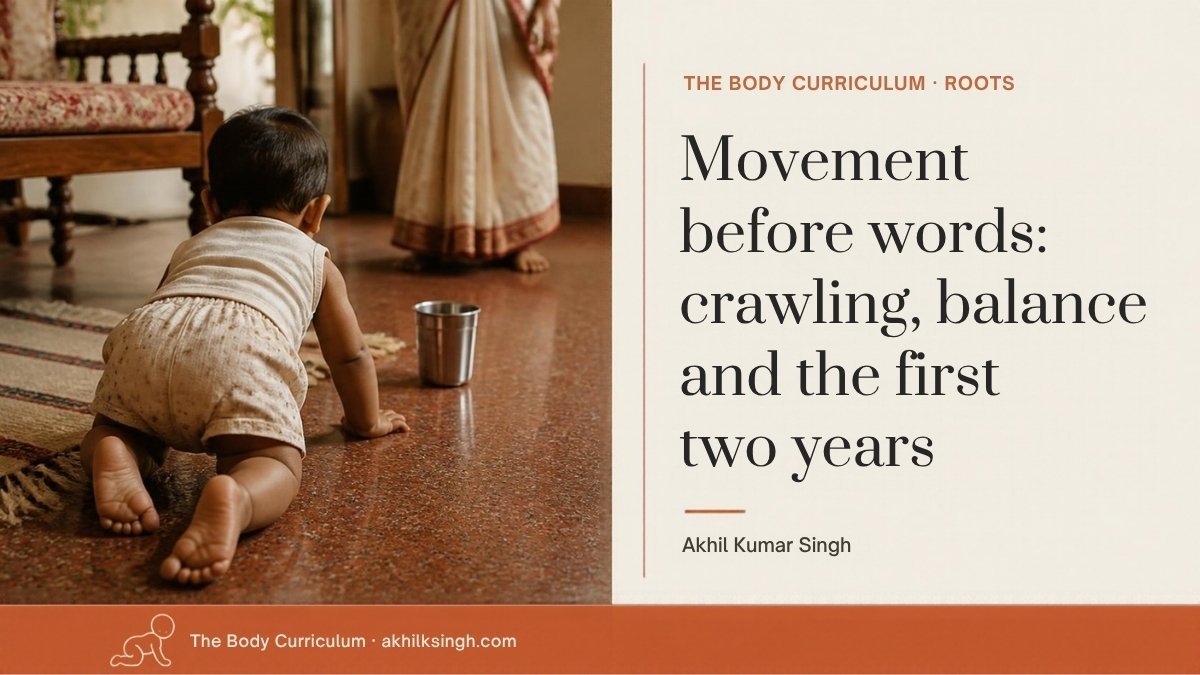
A baby crawling across a cool floor is not getting ready to think. She is already thinking, with her palms, her knees and her sense of balance.
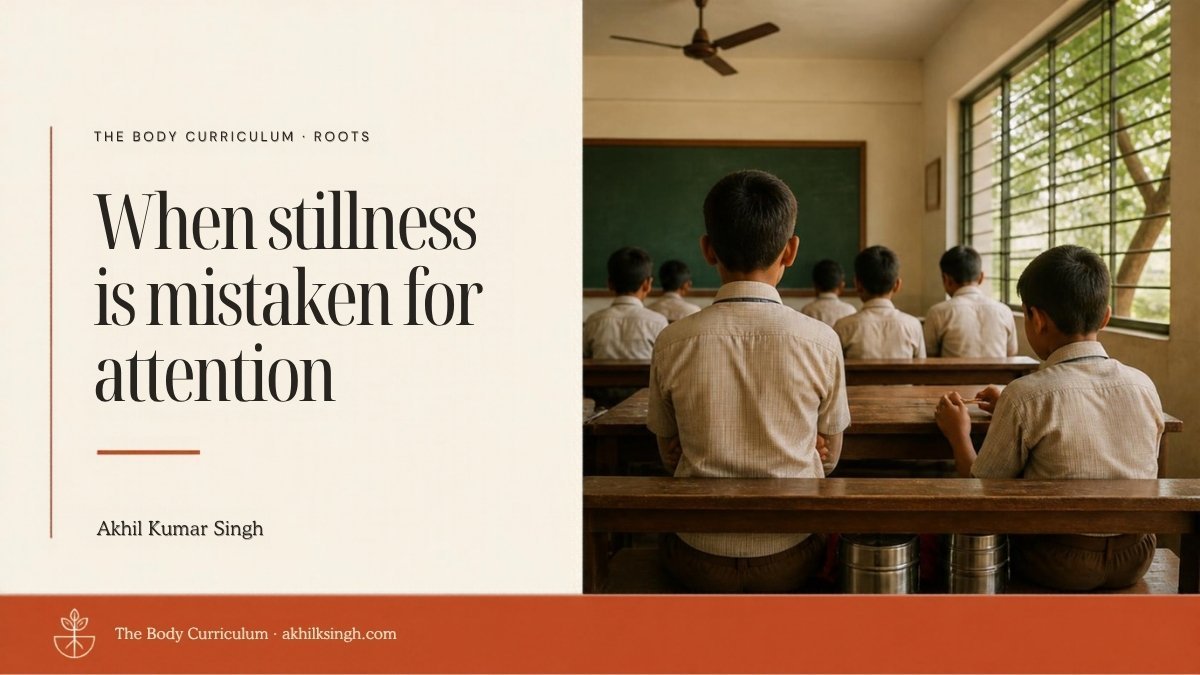
We read stillness as attention because stillness is visible and attention is not. What moving bodies are really doing, and why attention can be cultivated but never commanded.
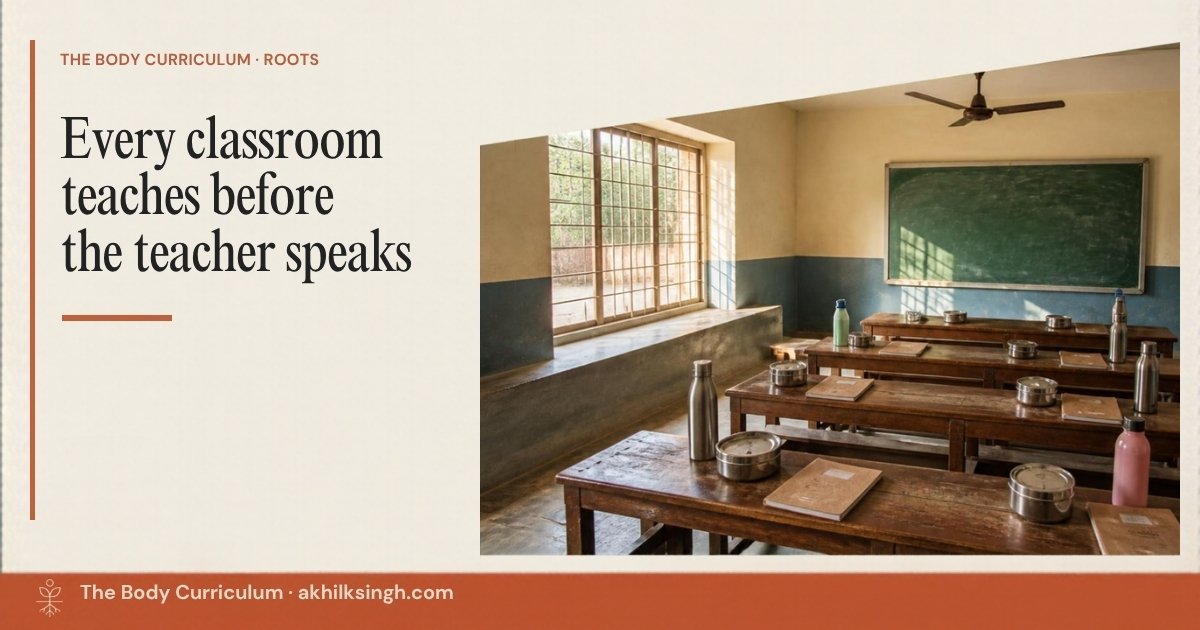
Nobody told the boy to walk along the ledge. The ledge did. James Gibson’s idea of affordances suggests that every classroom is already a lesson, whether we plan one or not.