Six hours of sitting: what the chair teaches
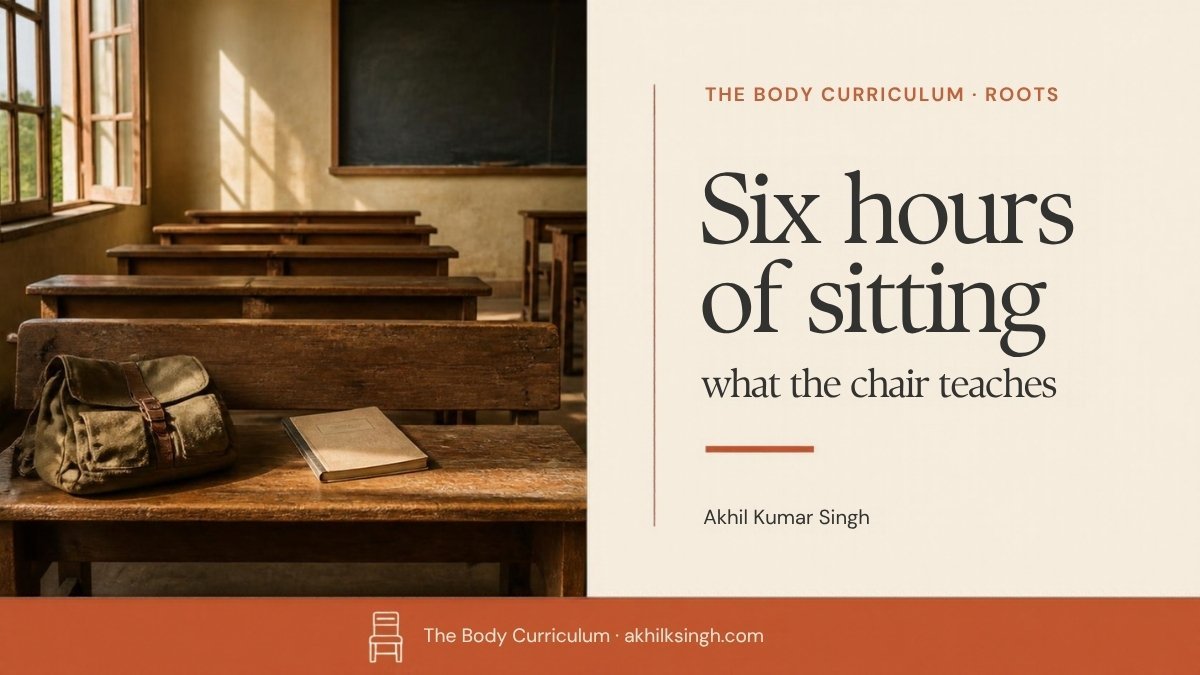
A posture held for years is a lesson. This essay asks what six hours of sitting teaches children about learning, attention and their own bodies, and why movement breaks are not the whole answer.

Two children rolling in the dust are usually playing, not fighting. How a teacher can read the signs, set three rules and step in only when the play stops being play.
Lunch is the richest sensory hour of the school day, and we spend it saying hurry up. A ten-minute weekly tasting helps children look, smell, touch, taste and find words for food.
Children cannot pay attention on command, but they can practise it. One ordinary object and one minute of looking teach the real skill, which is coming back.
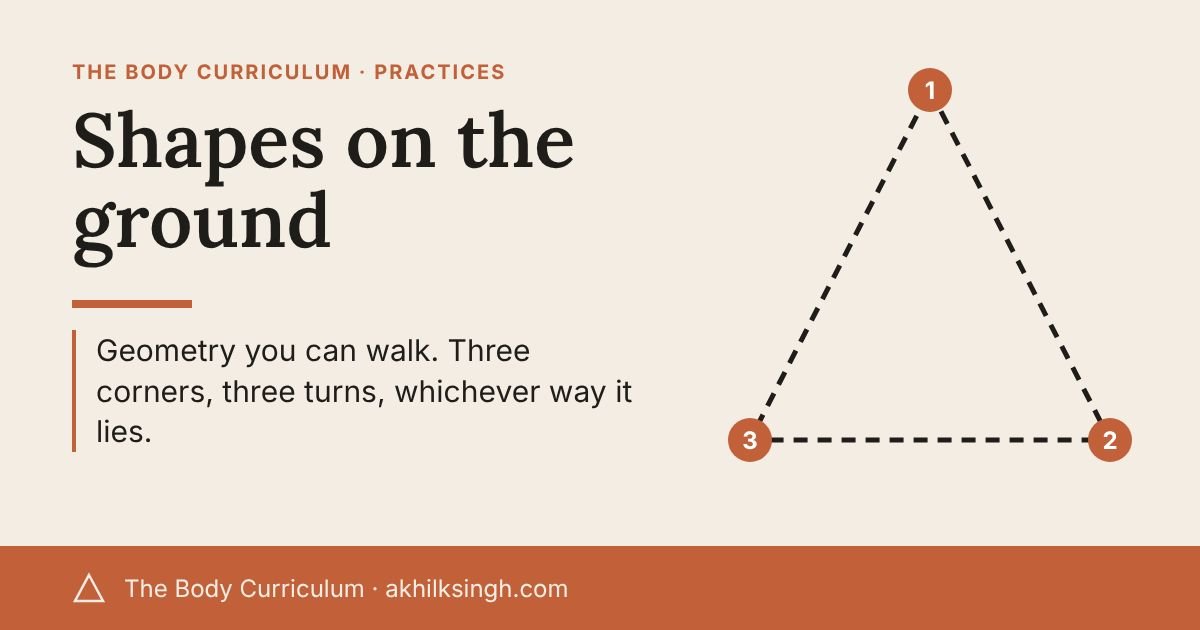
A child can count a triangle’s sides and still say a tipped one is not a triangle. Chalk the shape on the ground, let her walk it, and her feet settle what her eyes could not.
When children drift in a long lesson, a stretch helps for a minute. A movement break that carries the lesson itself does more, and needs no materials.
A child can read every word aloud and still not know what happened. Giving each action a small gesture, then reading again with still hands, helps children build the scene they are reading.
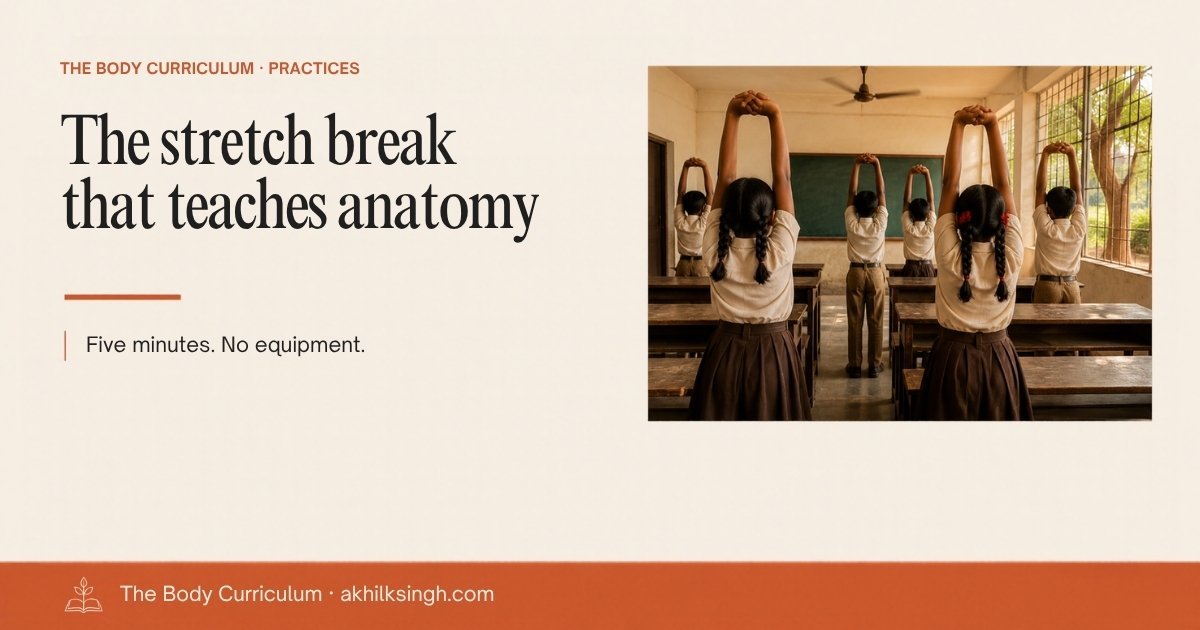
Five minutes of stretching can also be five minutes of anatomy. Children move one part of the body, name it and feel it working from the inside.
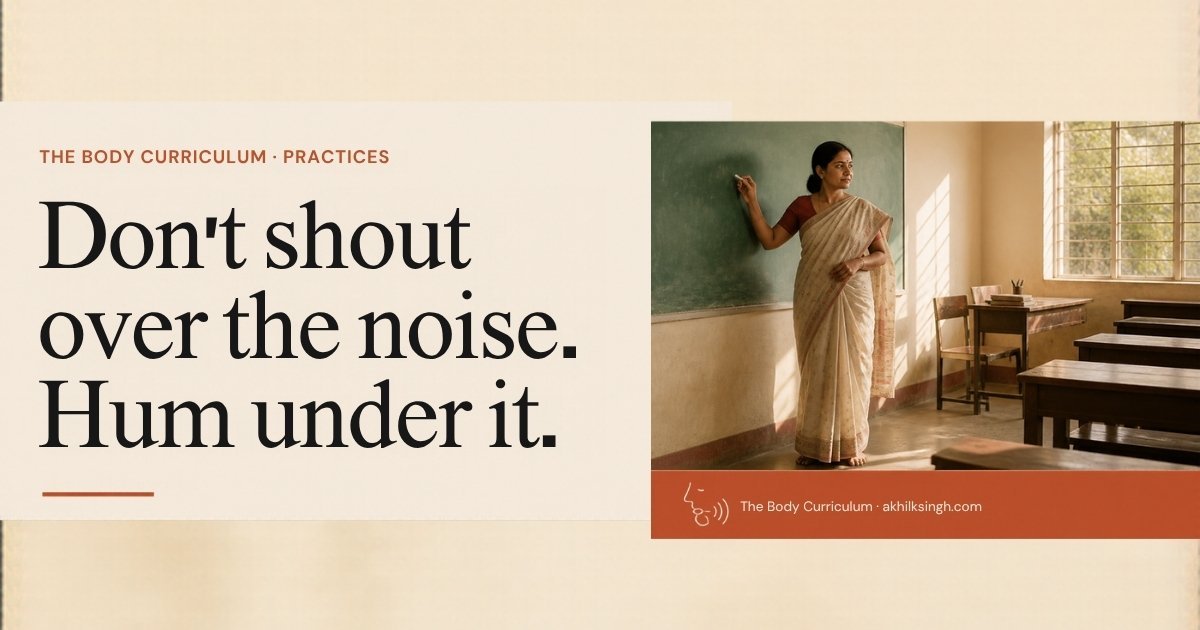
Shouting buys a classroom ninety seconds of silence. A minute of humming together, one low note growing softer, can settle the room itself.
Every child carries the morning in on the body. Here is how a teacher can read it at the door in thirty seconds, gently and without judging.