“What did your body learn today?”

Ask children what they learnt and you get a timetable. Ask what their body learnt, and let them show it first, and you get the day back.
 Akhil K Singh
Ask children what they learnt and you get a timetable. Ask what their body learnt, and let them show it first, and you get the day back.

Free play is often the teacher’s tea break. This practice shows how to watch children at play, when to join in, and when to stay out.
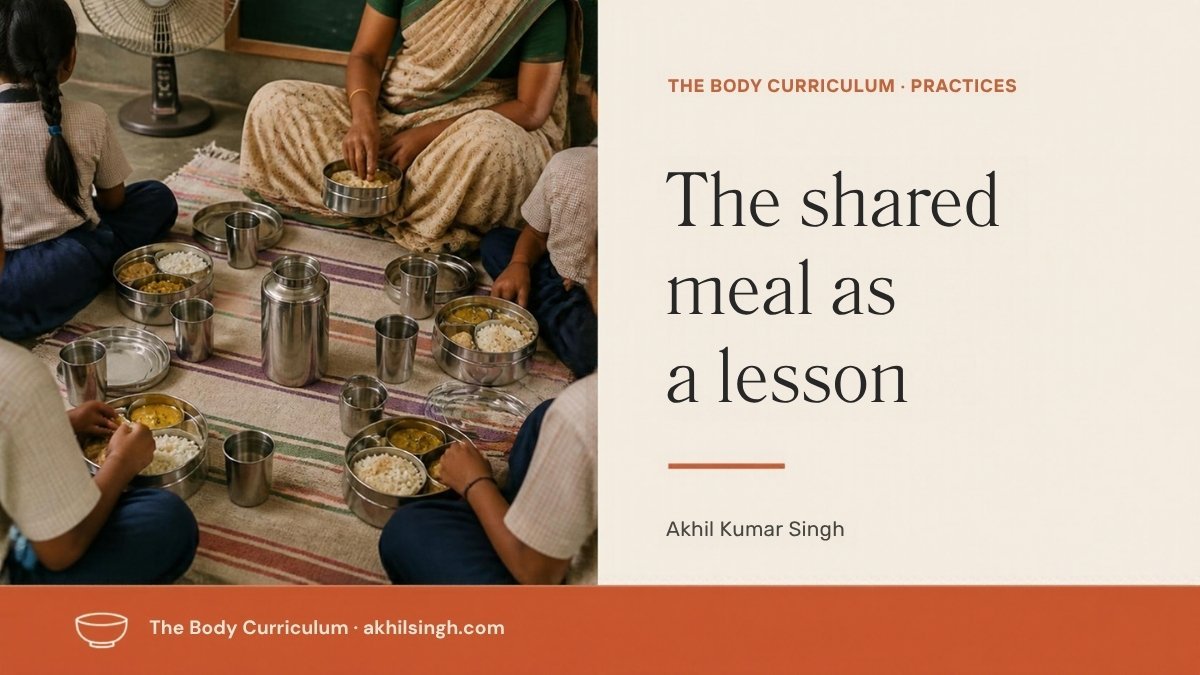
Lunch is often the least planned part of the school day. Here is how to turn the shared meal into a daily lesson in taste, trust and listening to the body.
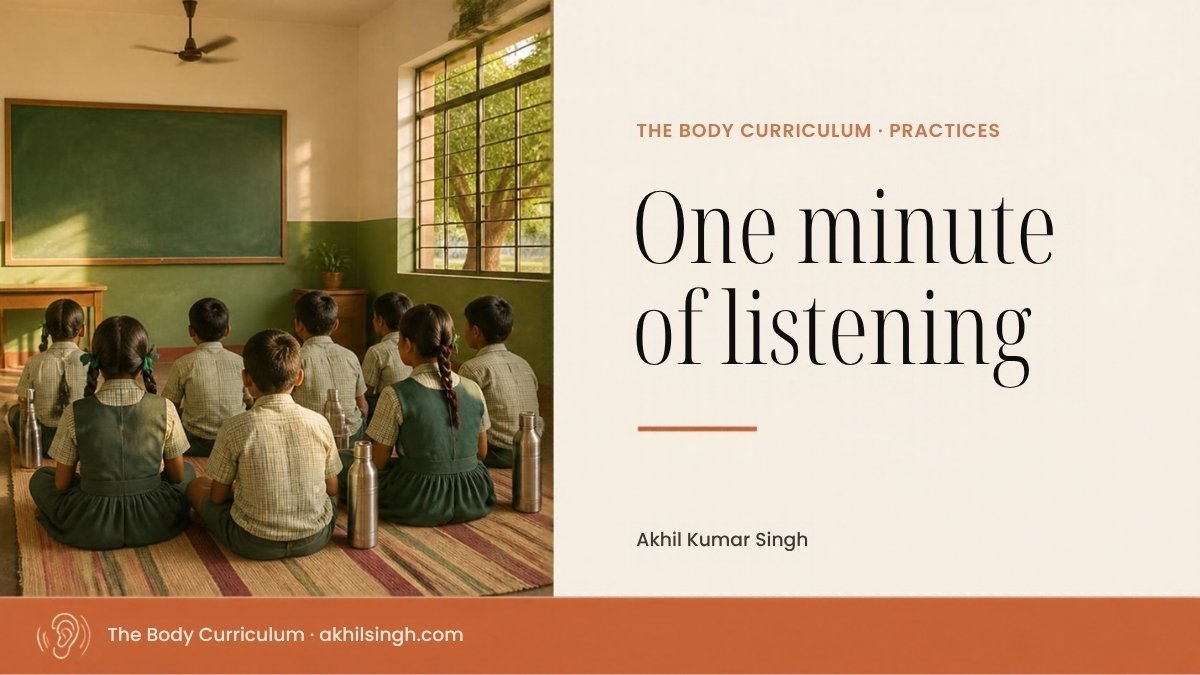
One minute in which the whole class listens to the room, not to the teacher. A simple practice that settles a noisy class without a single shout.
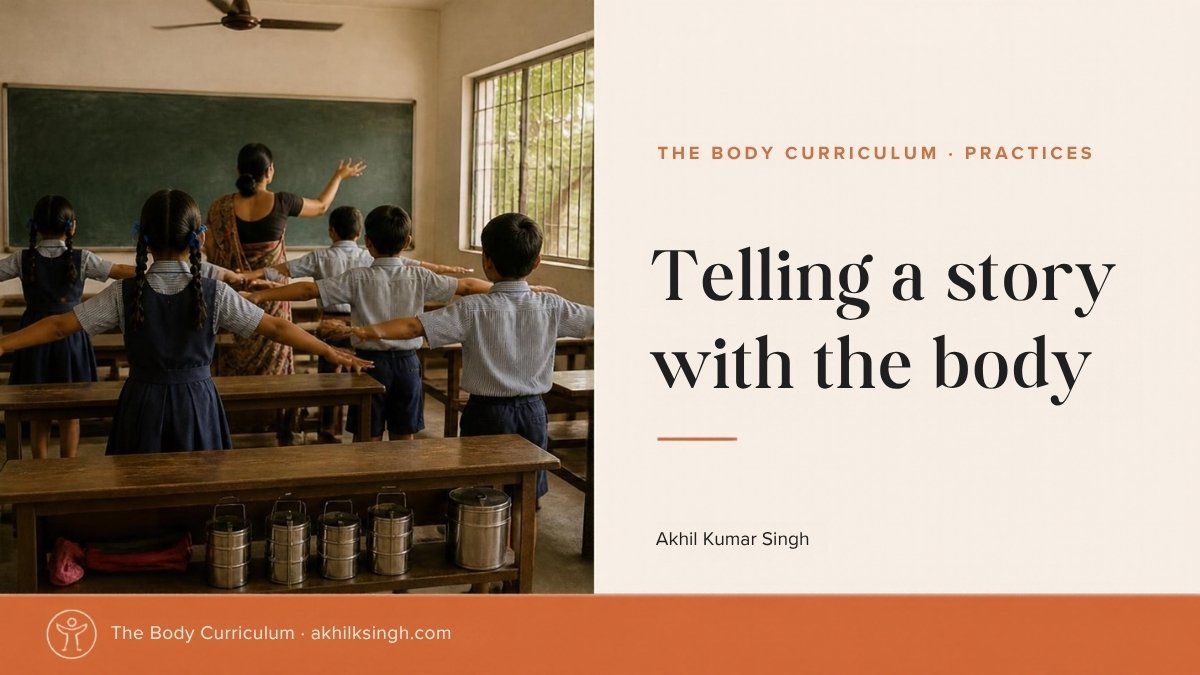
When a child mimes the story you are reading, they are not fidgeting. A simple routine for letting a story pass through children’s bodies, and what the evidence says.

A loud chant can hide a silent child. Here is a five-to-eight-minute way to make classroom recitation carry meaning, breath and reading, and to hear every voice.
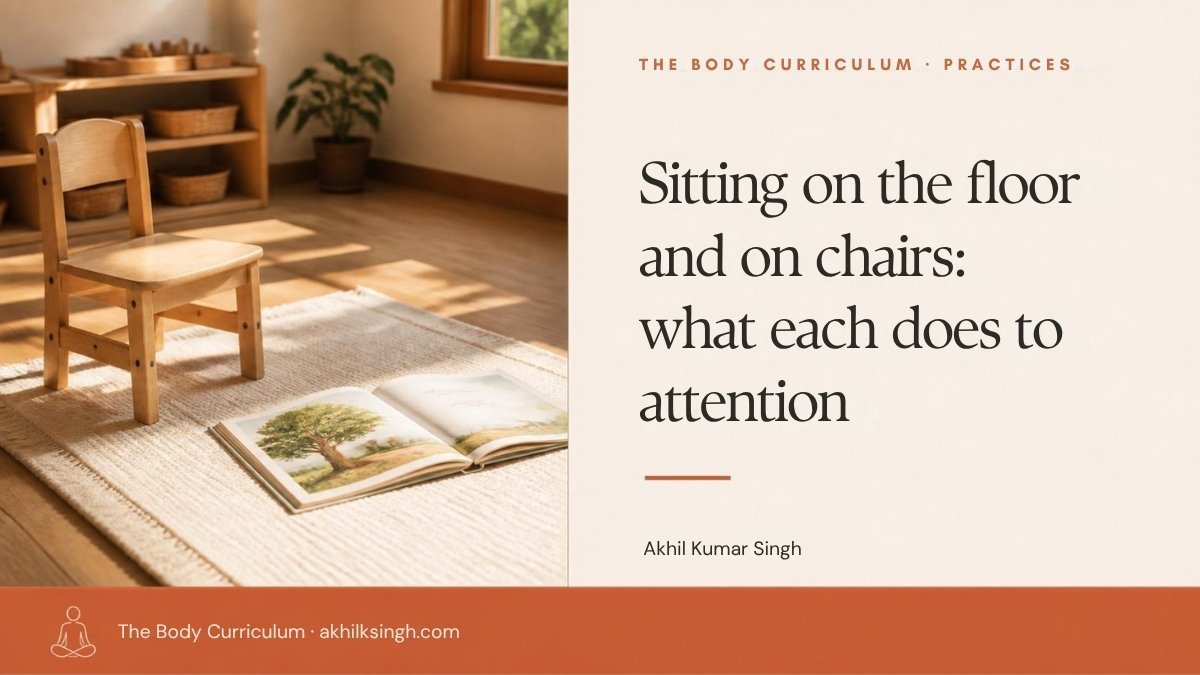
Half the class on the floor, half on chairs, and only some of them able to attend. A simple practice for matching the seat to the work.
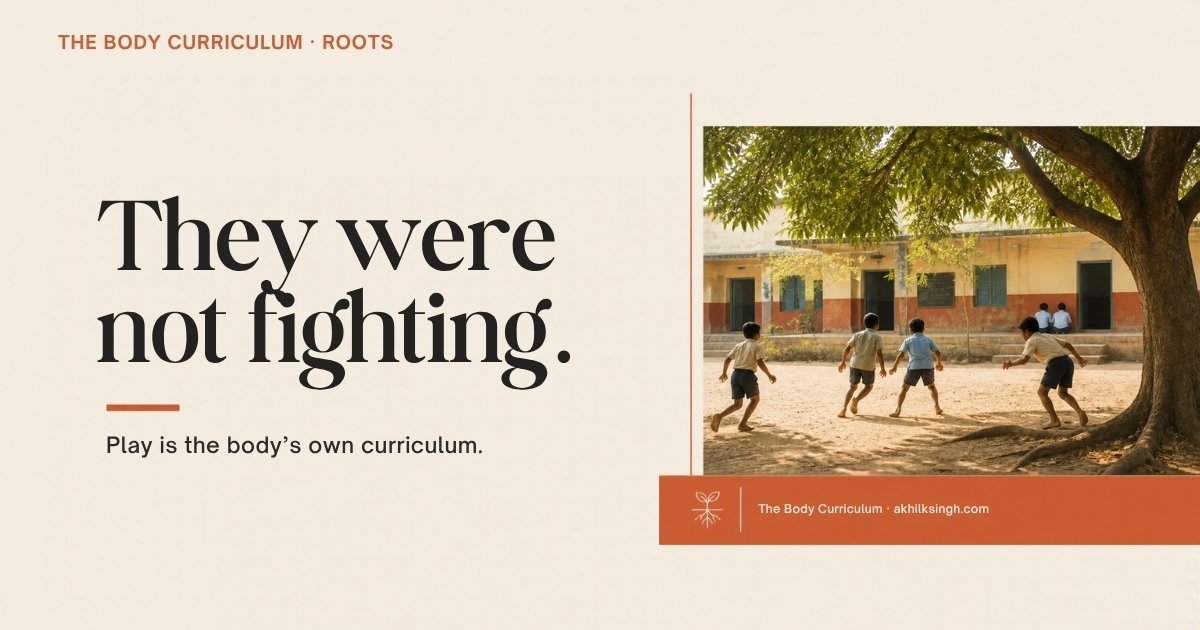
Two boys wrestling in a school courtyard are not fighting. Play is how a young body finds out what the world is and what it can do in it, and it deserves a place for that reason, not for the marks it might raise.
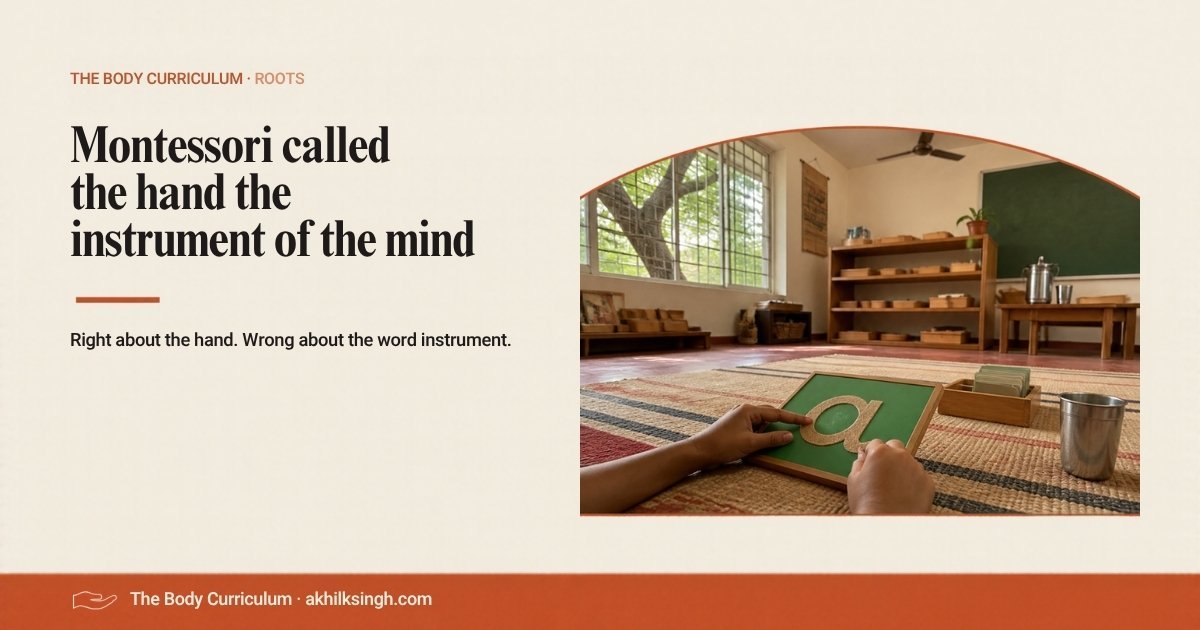
Maria Montessori trusted the child’s hand long before the pencil. But she called it the instrument of the mind, and that one word hides an old split between mind and body.
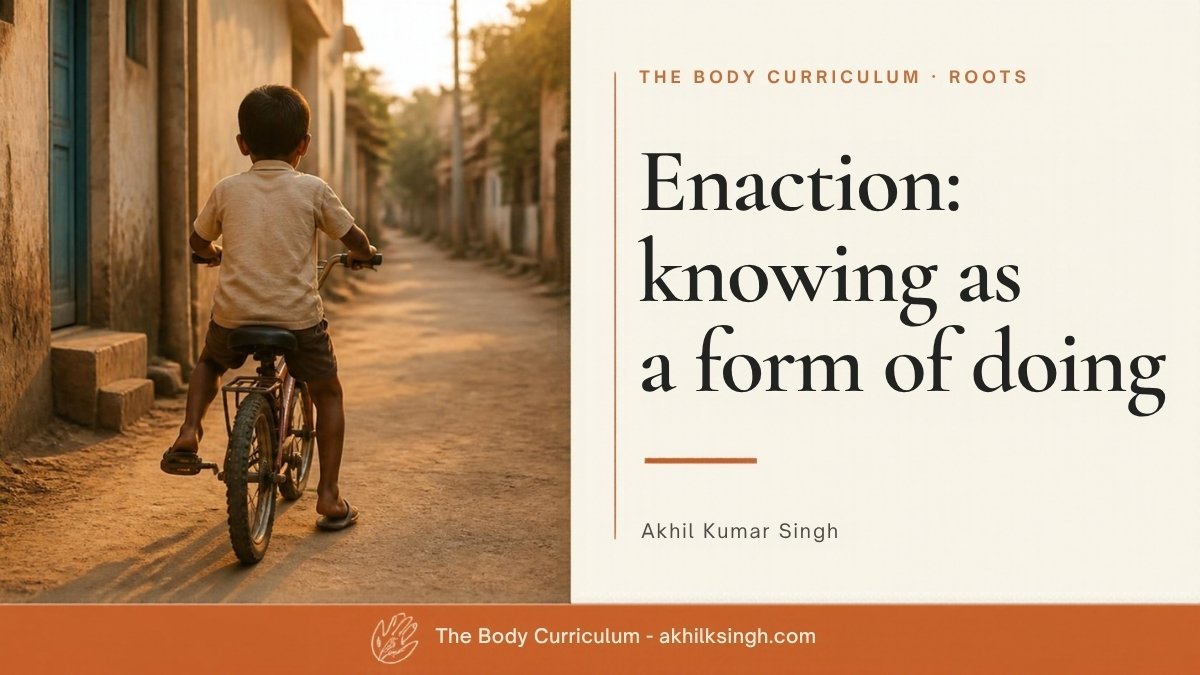
A child can learn to ride a bicycle in one evening without a word of explanation. Enaction asks what that tells us about knowing, and about the schools that count only the definition on the blackboard.